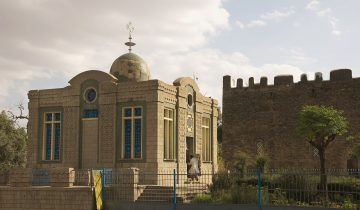
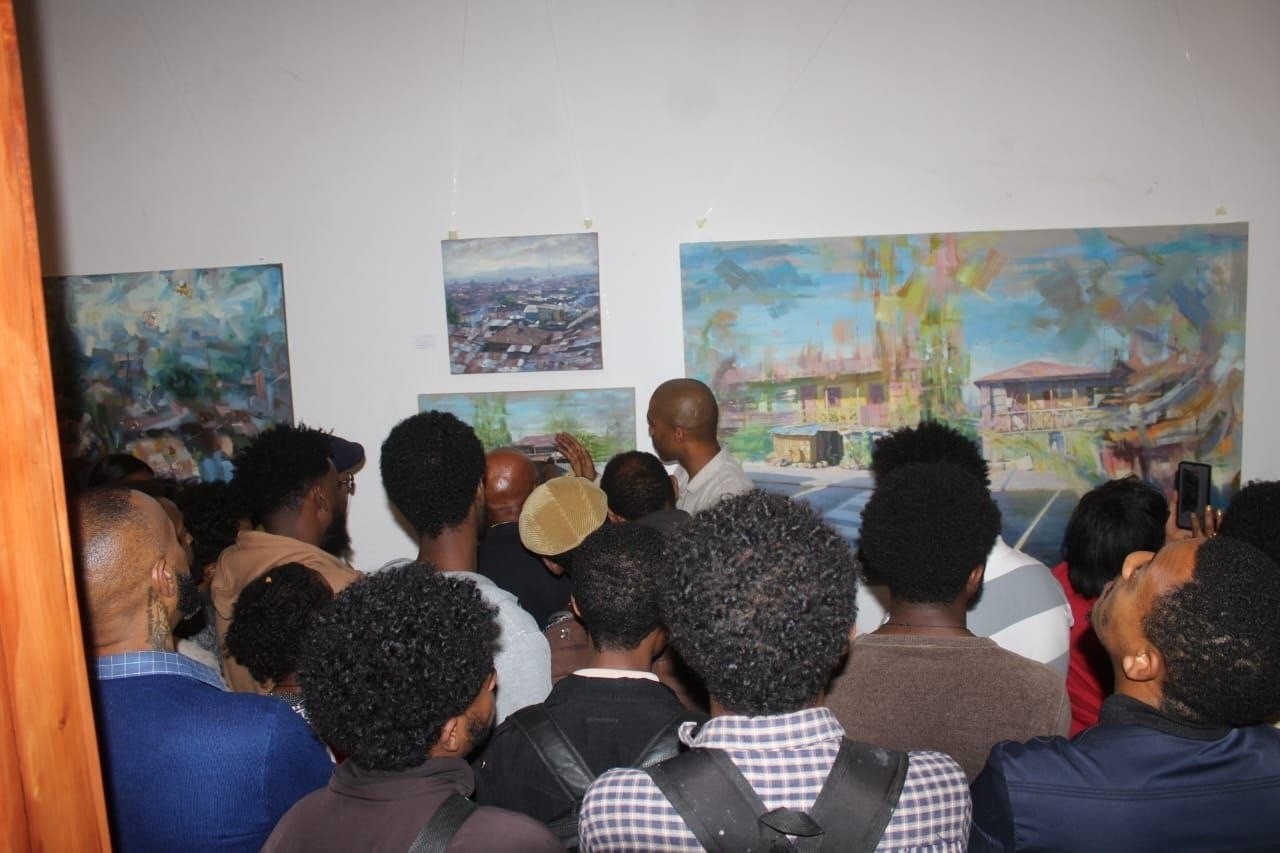
Painter Haron Suleiman has filled Addis Ababa’s Taitu Cultural and Educational Center with 49 paintings of the city’s old neighborhoods for Wub Addis III (ውብ አዲስ), open through Sunday, December 6.
Wub Addis means “Beautiful Addis,” and the title is a gentle argument. Haron, who was born and raised in the capital, wants people to see that the city’s beauty does not live only in its new towers and wide roads. It also lives in aging houses, narrow streets, small shops and the familiar corners where whole generations grew up. Some of the places he painted for this show are already gone, or so changed that a returning visitor would walk right past them.
The last chapter of a three-part love letter
This is the third and final part of a series Haron has been building for years. The first show, Wub Addis I: Midday at the Market, followed the small traders of the city’s gulits, the open-air street markets, as they worked under the midday sun. Wub Addis II: Doorstep moved to neighborhood shops, with their painted fronts, stacked fruit and crowded shelves.
For the finale he went home. The new work turns to older residential areas and traditional houses, many of them tied to his own childhood. Of the 49 pieces, 39 are oil and acrylic paintings and 10 are watercolors. The show opened on Thursday, November 19, which is Hidar 10 on the Ethiopian calendar.
Months of work behind every street corner
The paintings look easy and relaxed, but they take a long time. Haron told Capital that he spends about a month researching a single painting, visiting the location and making studies before he picks up a brush. A large, realistic canvas can then take three to four months to finish, and even the smaller pieces take two or three weeks.
He has paid for most of the project himself across nearly 14 years, covering transport, research trips, studio rent and paint. City culture, arts and tourism officials helped him organize the second and third shows. The public has answered. In the first days after the opening, he estimated, 300 to 400 people came through the doors every day.
A painter’s warning about AI
Haron also has something to say to younger artists. He accepts that AI tools can be useful, but he worries that leaning on them too much will weaken the basic skills a painter needs: looking closely, drawing, studying color and slowly finding a personal style. For him, what gives a painting its meaning is the artist’s own experience, emotion and understanding of the people around them.
That belief shows in the work. Haron gives an ordinary shopfront or an old family house the attention other painters save for a portrait, because to him those places carry history and feeling that are easy to overlook until they disappear.
Wub Addis III caps a lively fall for painting in the capital, following Tewoldebrehan Kidane’s GEREZAT at Fendika and Mulu Legesse’s solo show at the Alliance Ethio-Française. Haron’s show stays up at the Taitu center until Sunday, December 6, Hidar 27 on the Ethiopian calendar, which leaves a little more than a week to catch the final chapter of his Addis Ababa.