
Injera (እንጀራ) is the sour, spongy flatbread at the center of most Ethiopian meals, made from teff flour and water left to ferment for one to three days, then baked on a round clay griddle.
It is bread, plate and spoon at the same time. Stews are spooned on top, you tear off a piece with your right hand to pick them up, and when the food is gone the injera underneath, soaked in sauce, gets eaten too. Ethiopian Orthodox Christians start the 43-day Fast of the Prophets, Tsome Nebiyat, this week, and until Genna on January 7 their tables will be full of injera and meatless stews.
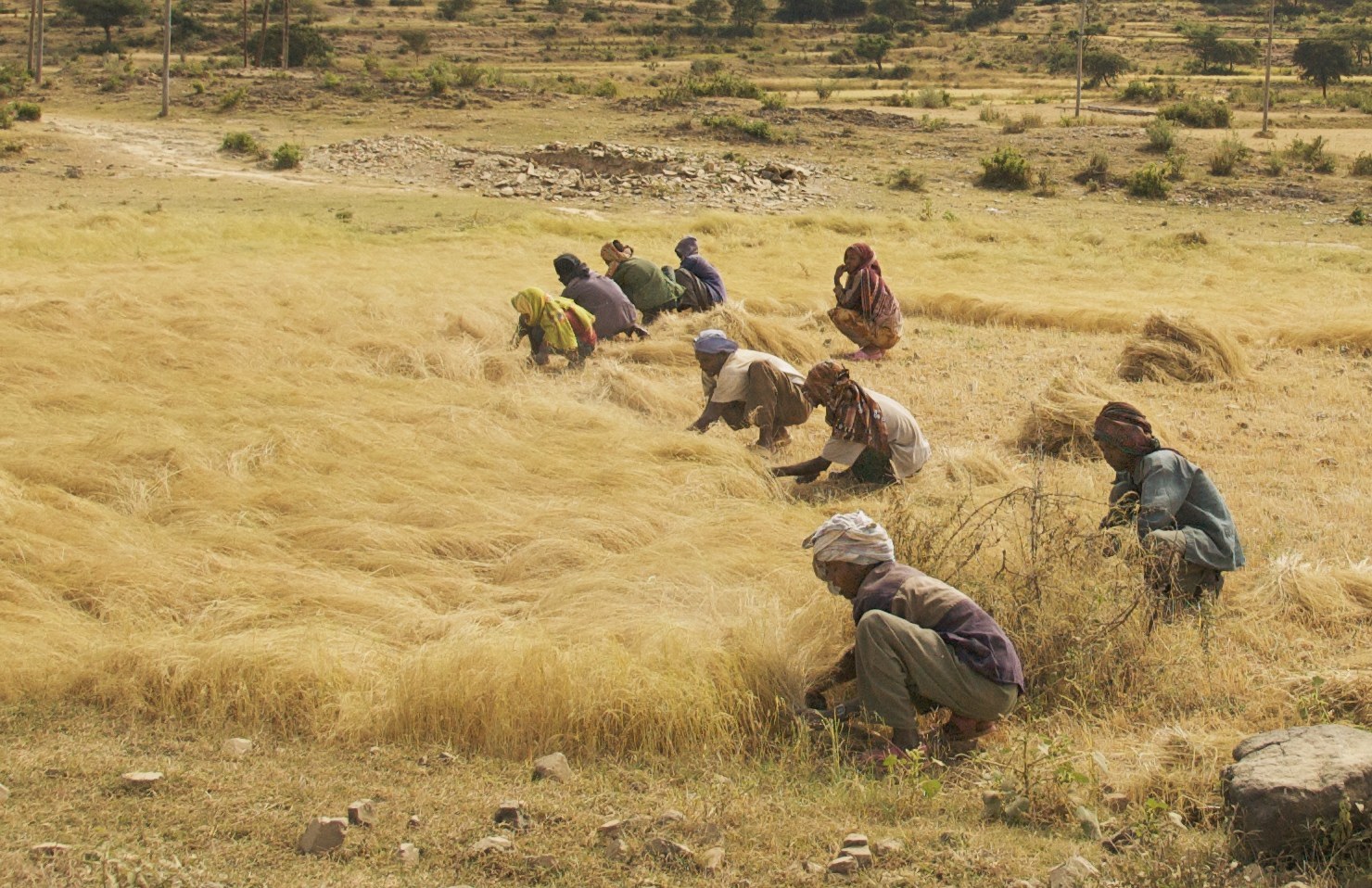
Photo: A. Davey / Wikimedia Commons, CC BY 2.0
It starts with a grain you can barely see
Teff (ጤፍ) is a grass that comes from the Ethiopian highlands, and farmers there have grown it for at least 3,000 years, possibly much longer. Its seeds are less than a millimeter across, so small that a thousand of them weigh about a third of a gram. One popular explanation for the name links it to the Amharic word teffa, “lost,” because a dropped seed is gone for good.
Ethiopia grew more than 90 percent of the world’s teff in 2016, and the crop supports around 6.5 million small farmers. It is rich in iron and naturally gluten free. The harvest in Ethiopia runs from November to January, so right now families across the highlands are cutting teff with sickles, the way the farmers in the photo above are doing.
Teff comes in shades. White teff, called nech (ነጭ), makes the pale, soft injera that costs the most. Red teff, quey (ቀይ), gives a darker, earthier bread, and sergegna (ሰርገኛ) is a mix of the two. Plenty of cooks also blend teff with barley, sorghum, wheat, corn or rice, depending on where they live and what the market charges that week, and in the lowlands injera made largely of sorghum is common.
The sour taste comes from patience
Making injera begins with flour, water and a starter called ersho (እርሾ), a clear yellow liquid that rises to the top of fermenting batter and is saved from the last batch. Yeasts and lactic acid bacteria do the rest. The batter sits for anywhere from a day to three days, depending on the weather, the altitude and the cook, and it slowly turns sour, the same way sourdough does.
Many cooks then take out a small part of the batter, boil it with water into a thick paste called absit (አብሲት), cool it and stir it back in. That step gives the bread its body and helps the bubbles form evenly. After a last short rest, the batter is thinned with water and it is ready.
How long the batter sits decides what kind of injera you get. Batter that ferments for less than a day gives aflegna, a thick, slightly sweet injera that turns dark red underneath and is common in the countryside. Batter left too long becomes komtata, a very sour injera most people would rather avoid.
A few minutes on the mitad, and never flipped
Injera is baked on a mitad (ምጣድ), a wide, flat griddle traditionally made of clay. The cook pours the batter in a spiral, starting at the edge and working toward the center, then covers it with a lid. Steam does the work. In two to four minutes the top is covered with small bubbles that Ethiopians call “eyes,” or ayn (ዓይን), while the bottom stays smooth because the bread is never turned over.
Cooks take those eyes seriously. In parts of the Amhara region around Bahir Dar, a woman who makes injera with good eyes is said to be as hard-working as a honeybee. The most common mitad today is electric, with a hinged aluminum lid, though plenty of cooks still bake over a wood fire on a clay stove like the one in our featured photo.
The video below, from the Adane Ethiopian Food channel, walks through a full batch of 100 percent teff injera made in the United States, from kneading the dough and making the absit to baking the rounds on an electric griddle.
How the table works
Fresh injera is folded or rolled and kept in a mesob (መሶብ), the tall woven basket with a cone-shaped lid that doubles as a small table in many homes. At mealtime a large round of injera goes on a tray, the stews go on top, and extra rolls sit on the side. Two or three people often eat from the same round.
The classic partner is wot, a slow-cooked stew. Doro wat, the chicken stew with hard-boiled eggs, is the holiday favorite, while shiro, a smooth stew of ground chickpeas or other pulses, is everyday comfort food. Injera also shows up at weddings, funerals and graduation parties, where guests often arrive carrying some, and the meal often ends with a round of buna, the coffee ceremony.
Eating with your hands also makes room for gursha (ጉርሻ), the habit of wrapping a bite of injera and stew and feeding it by hand to a friend or relative as a sign of affection and respect.
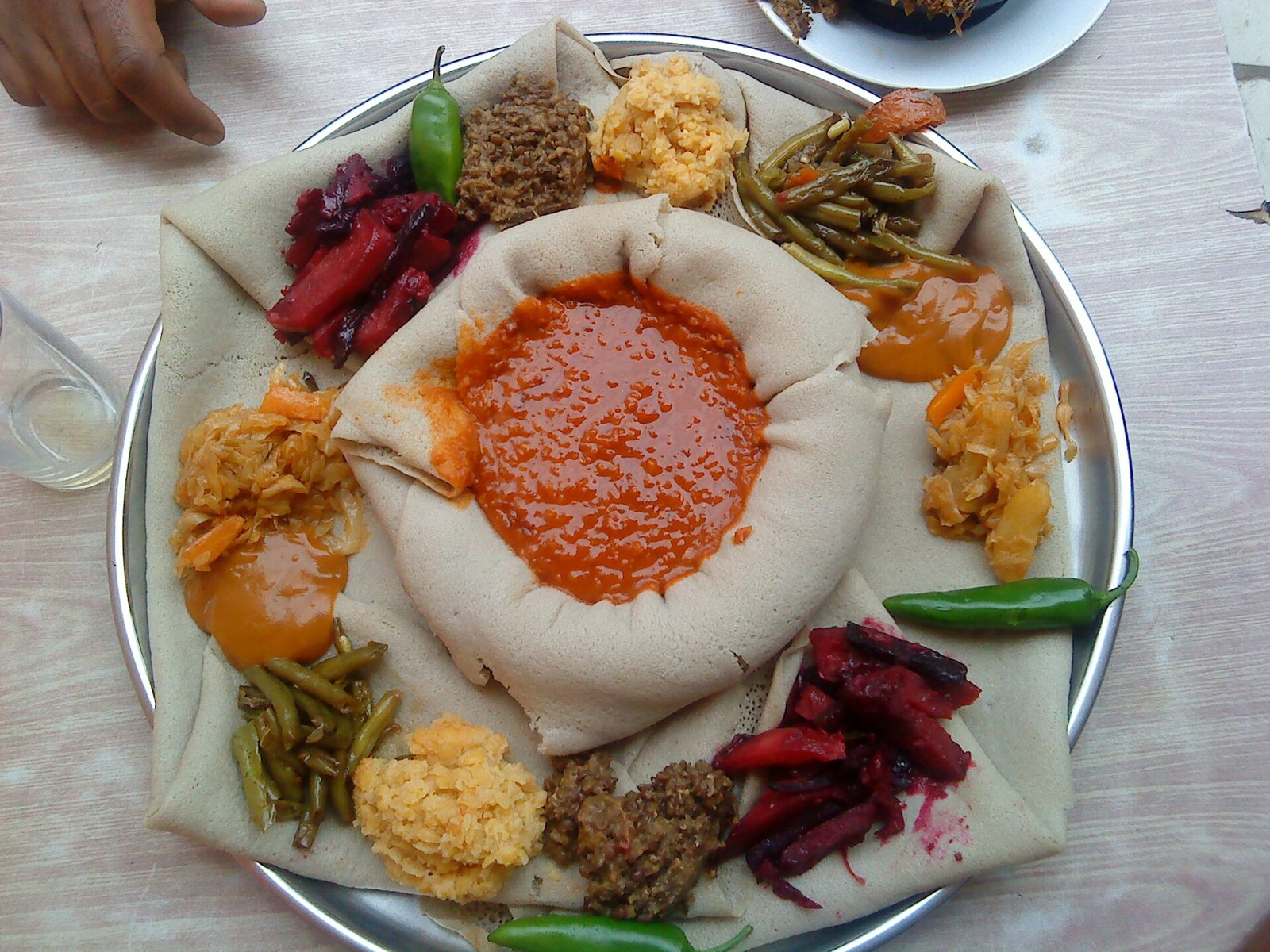
Photo: Dawityirga / Wikimedia Commons, CC BY-SA 4.0
Fasting season fills the platter with color
Orthodox believers keep fast days on most Wednesdays and Fridays and through long seasons such as the one that starts this week, giving up meat, dairy and eggs. Injera does not change, but everything on top of it does. The best known fasting meal is beyaynetu (በያይነቱ), a round of injera crowded with small portions of dishes such as red lentil stew, shiro, greens, cabbage, beans and salad, each a different color.
That is also why so many Ethiopian restaurants in the United States have long vegan menus. The dishes were not invented for American diners. They come straight from a church calendar that keeps believers off animal products for a large part of the year.
Leftovers rarely go to waste. Fresh injera lasts about three days before mold sets in, so day-old rounds are torn up and mixed with sauce for fitfit (ፍትፍት), a breakfast favorite, or dried into dirkosh (ድርቆሽ), which keeps for months.
Injera in America
Injera became much easier to find in the United States in the 1980s and 1990s, as Ethiopian immigration grew after the Refugee Act of 1980. In 2006 Ethiopia banned exports of the raw grain for fear of shortages at home, easing the ban in 2015. Farmers in Idaho, California, Texas and Nevada now grow some teff, and many diaspora kitchens and bakeries still blend it with rice or wheat flour.
That blend is worth knowing about if you or your friends avoid gluten. Teff on its own is gluten free, but injera from a store or restaurant may contain wheat or barley, so it is worth asking before you order. Ask, too, about the mix of white and red teff, since it shapes the color and taste of every round on the tray.