
Mahmoud Ahmed, the Ethiopian singer whom many fans call the king of tizita, said in August that his 26th album will be his last. He presented the album, called Le Tarik, or “For History,” at the Sheraton Addis hotel on Wednesday, August 26, Capital newspaper reported.
The announcement came 64 years after his first night on stage in Addis Ababa, in 1962. In those years his voice traveled from Addis Ababa nightclubs to festivals in Europe and concert halls in the United States.
From Mercato to the Arizona Club
Mahmoud was born in 1941 in Mercato, the large market district of Addis Ababa. The Continent, a weekly African newspaper, reported that his parents came from rural Gurage, in what is now the Central Ethiopia Region.
His family had little money, so he started working as a child. The Ethiopia Observer, a news and culture website, wrote that he sold injera, shined shoes and worked as a nightclub bouncer. While he shined shoes, he listened to music from the radio station of the Imperial Bodyguard, the emperor’s guard unit.
As a young man he washed dishes at the Arizona Club, a popular nightspot in the capital where the Imperial Bodyguard Band played. One night in 1962, the band’s singer did not come. The Amharic edition of The Reporter wrote that the missing singer was Tilahun Gessesse. The band let the young worker sing, and he soon became one of its regular singers.
He stayed with the band until 1974. Many years later he told The Continent about that first night. “Even with nerves, after the first song, I couldn’t even tell you what was in front of me anymore,” he said. “I got lost in the music.”
Nightclubs and the Golden Age
At that time, much of Ethiopian music came from azmaris, traditional singer-poets who played instruments such as the one-string masinko. The Continent wrote that Mahmoud helped create a new nightclub sound. That sound belongs to what many now call the golden age of Ethiopian music, in the 1960s and 1970s.
His first record was released in the early 1970s with the Venus Band, and it carried two songs, Nafqot New Yegodagn and Yasdestal, The Reporter said. He later recorded with groups such as the Ibex Band, the Dahlak Band and the Roha Band.
Many of his early hits were new versions of old folk songs. For this reason, people gave him the teasing name Firash Adash, or “mattress renewer,” the Ethiopia Observer wrote. The name meant a singer who did not record his own original songs.
Ere Mela Mela Reaches the World
In 1981 Mahmoud toured the United States with the Walias Band, led by the music producer Amha Eshete. A new Amharic biography, reviewed by the Ethiopia Observer in 2025, describes one night on that tour at the Warner Theatre. Tickets cost $25, and only 200 of the 1,500 seats were sold.
Some band members wanted to cancel the show, but Mahmoud said they should respect the people who had come, so the band played. In the following weeks, the band’s concerts at the Capital Hilton sold out on two days in a row, the review said.
A bigger change came in 1986, when the Belgian label Crammed Discs released Ere Mela Mela. The collection came from records he had made with the Ibex Band about ten years earlier, Music in Africa reported. According to The Continent, The New York Times reviewed the album and called it “a vital pop-music style from a little-known corner of the world.”
The French producer Francis Falceto told The Continent that Ere Mela Mela first made him interested in Ethiopian music. Falceto later produced the Éthiopiques series of compact discs for the label Buda Musique. Several volumes belong to Mahmoud, including Almaz (Volume 6), Ere Mela Mela (Volume 7) and Alèmyé (Volume 19).
The new attention brought tours with foreign bands, such as the Either/Orchestra from Boston. By 2016, the French group Badume’s Band had toured with him for more than ten years, Music in Africa reported.
Tizita and the Songs Ethiopians Keep
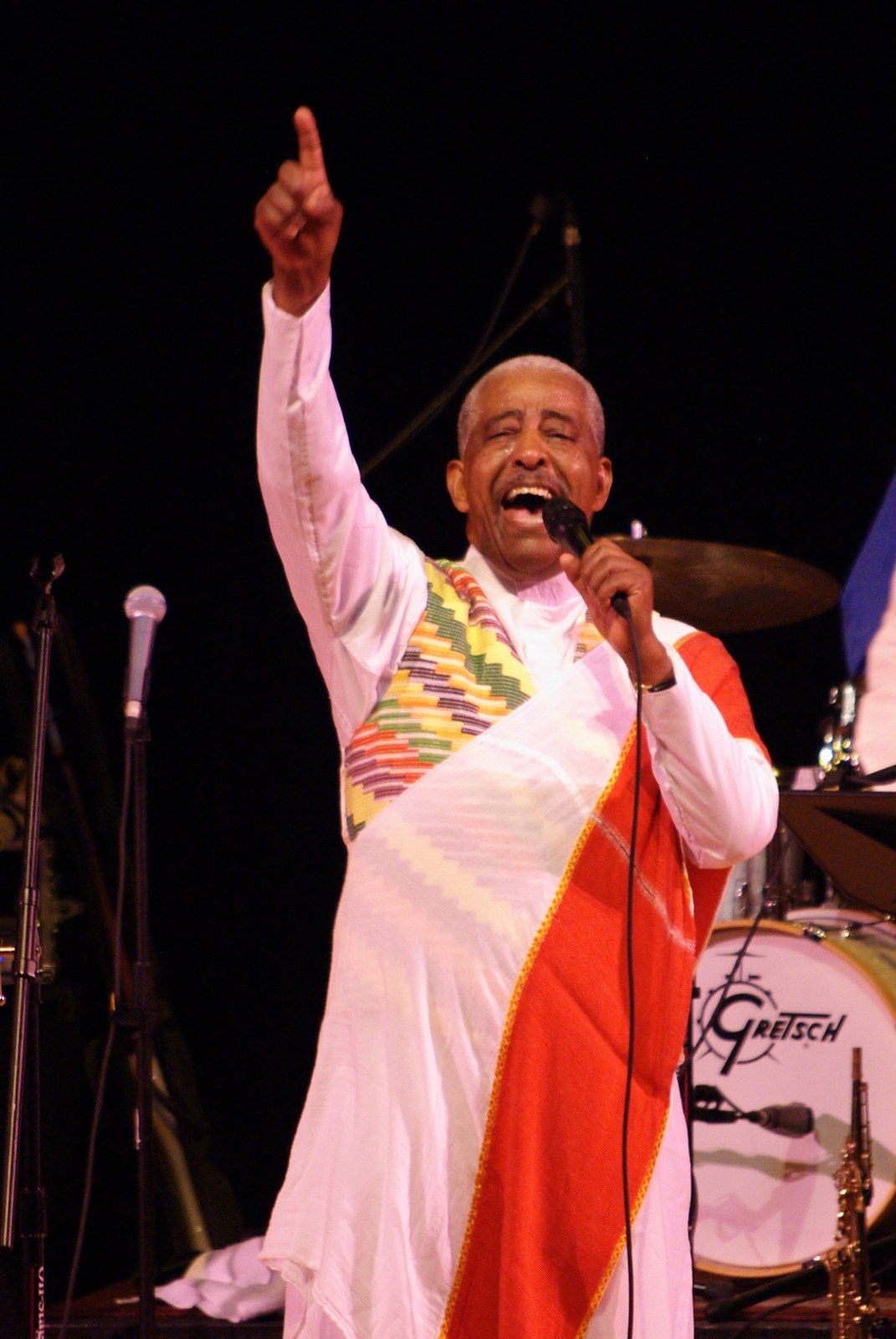
Tizita is the word most closely tied to his name. It means memory or longing, and it names both a famous song and a slow style of music about the past. The Continent called Mahmoud “the king of nostalgia,” and The Reporter wrote that fans know him as the king of tizita.
“I get goosebumps when I hear others perform the song,” he told The Continent shortly before his farewell concert. “I could sing it all day and night.”
Video: Mahmoud Ahmed’s recording of Tizita, listed under the official track title Tezeta, from the album Ethiopiques, Vol. 7: Erè mèla mèla, published on YouTube by Buda Musique.
The Reporter said he has given listeners more than 80 songs in Amharic and Guragigna. The paper named Ere Mela Mela, Yeshi Haregitu and Tew Limed Geleye among his best-known works. The Continent wrote that no wedding is complete without his song Yitbarek, which means “let it be blessed.”
On stage he was also a dancer, and the Ethiopia Observer wrote that he “had no equal” in eskista, the fast shoulder dance that Ethiopians love.
Honors and a Life in Print
In 2007 he won a World Music Award from the British Broadcasting Corporation (BBC) in the Africa category, The Reporter said. On July 19, 2016, the French ambassador to Ethiopia, Brigitte Collet, gave him one of France’s highest honors. She made him an Officer of the Order of Arts and Letters. “Your contribution to Ethiopia and world music is tremendous,” Collet told him, according to Music in Africa.
He has also sung at Carnegie Hall in New York. The Reporter wrote that he was the first Ethiopian singer to give a solo concert there. The paper added that Addis Ababa University gave him an honorary doctorate for his service to Ethiopian art.
The first Amharic biography of the singer, written by Wosen Debebe Mandefero with Mahmoud’s help, was launched in January 2025, The Reporter said. The Ethiopia Observer wrote that it runs to 542 pages in 12 chapters.
The bass player Giovanni Rico played with Mahmoud in the Ibex and Roha bands. In the book, he describes the singer as “instinctively disciplined, unwaveringly serious about his work, and seemingly tireless.” The Observer called the book a good starting point, but said a full critical study of the singer has yet to be written.
A Farewell Night and a Final Album
Mahmoud said goodbye to live performance on Saturday, January 11, 2025, at Millennium Hall in Addis Ababa. Singers including Lij Michael, Gossaye Tesfaye and Tadelle Roba also performed, Addis Insight reported. The Continent wrote that people began to arrive at 4 p.m., but Mahmoud did not reach the stage until 1:35 a.m.
He walked to the microphone with a cane and an assistant, dressed in his usual white traditional clothes, the paper wrote. Before the concert he told The Continent that his fans had shown him love and helped him grow. “To know that they are now here to show me their respect at this farewell, I would be happy to die on that stage,” he said.
Le Tarik is meant to be his last word in the studio. The Reporter wrote that the album has 13 songs that mix modern instruments with traditional Ethiopian scales. Its lyrics deal with love, country, life and social values, the paper said.
The songs are not recent. Abraham Wolde, a musician who helped organize the farewell concert, told The Reporter that the album was made ten years ago. It was mixed and mastered six years ago, he said.
Yisakal Entertainment is managing the release on Spotify, Apple Music, YouTube and other services, Capital reported. At the August press conference, Mahmoud asked young musicians to keep Ethiopia’s cultural identity and traditional scales while they use modern tools, the paper said.
Not everyone close to him accepts the word “final.” Rico, who played on three songs on Le Tarik, told The Reporter that he does not agree with calling the album Mahmoud’s last work. In his view, the singer’s songs and his mark on Ethiopian music have no end.