Addis Ababa still has nights where the room feels like it is breathing with the music. You walk in, someone is tuning a masinko, a dancer is already warming their feet, and for a while the city outside gets quieter. Those rooms used to feel easier to find. Lately people talk about them like rare weather.
Traditional azmari bets, the music houses that carried live song and joke and dance for so long, are under real pressure. Rent goes up. Buildings get redeveloped. A place that felt permanent can disappear in a season. That part is hard to romanticize. At the same time, creatives in Addis are not waiting for the old map to come back. They are stitching new stages into cafes, hotel compounds, warehouses, and multi-use rooms that work as third spaces, not only as concert halls.
This is not a funeral for live music. It is a story about how the sound keeps moving when the walls move first.
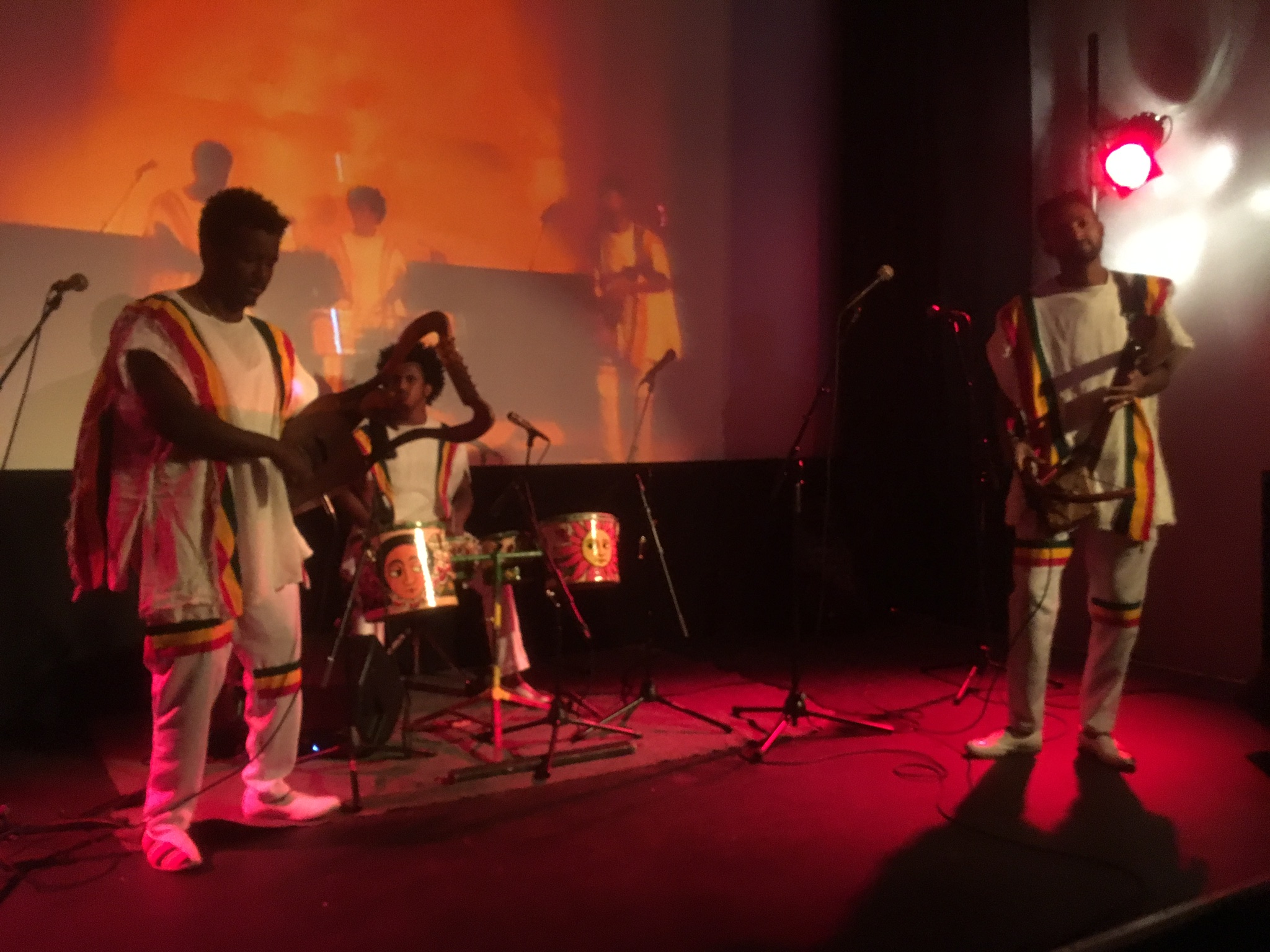
Photo: Morganfitzp / Wikimedia Commons (CC BY-SA 4.0)
For a lot of people, Fendika is still the reference point. Melaku Belay built that cultural center into a home for azmari nights, experiments, and visiting artists. For about 17 years it lived in Kasanchis, the kind of place you remember by the feeling of walking through the door more than by the address. Redevelopment forced a move. Now Fendika runs out of the Hyatt Regency in Bole, a tourist-heavy corner of the city that looks different from the old neighborhood room. Melaku has said the point is that Fendika can live anywhere and still stay community-led. That line sticks because it sounds like both grief and stubborn hope.
Monday nights at Moseb Music Center give you another version of what a music room can still be. Musician and owner Tasew Wendim opened the space in 2023 near a busy highway entrance. He plays washint. The band answers with krar, masinko, and kebero. Dancers go all in. A strong voice can pull the room back toward older melodies without turning the night into a museum show. Wendim talks about wanting people to arrive as they are and feel welcome. That sounds simple until you notice how few places still make that invitation feel real.
Other rooms that fed the underground did not survive the cost squeeze. SHIFTA, the Afro-Caribbean restaurant and community spot co-founded by Feben Kassaye, closed in 2023 after operating costs and rent climbed past what the business could carry. It had been a launchpad for alternative culture, comedy, poetry, and young organizers testing ideas. When a space like that shuts, the calendar of the city gets thinner overnight.
Yohannes Hadish felt that loss in a practical way. He runs The Lab, which he does not like to call events so much as episodes. The nights center DJs who push boundaries for a crowd ready to move. SHIFTA had given him room to experiment. Now he can point to only a few venues that can host The Lab, where there used to be more options. House parties and smaller private rooms have filled some of the gap. The model is messier, but it keeps people meeting.
Venue Warehouse, opened in 2022 by Della and Gigi and nicknamed Venue, arrived right as the scene was shifting. They wanted infrastructure for live music. What they also saw, Gigi has said, is Addis leaning less toward live bands in many rooms and more toward DJ culture. When The Lab needed a bigger space, it moved there. Movie screenings, community gatherings, and promoter partnerships now share the same hall. The building earns its keep by staying flexible.
Kebelezero tried to build a dedicated creative warehouse outside Bole in February 2024. Robel Yohannes and Akilas Solomon wanted live music, workshops, and a hub people could grow inside. About six weeks later, redevelopment took the space. The team had to recover money and morale, then redesign the idea itself. What came next looks more like a network than a single address: kelemsounds, unplugged shows at the Hilton Addis Ababa, and kebeleradio with Sheger Studios, bringing DJs into distinctive corners of the city and treating Addis itself as the venue. Robel put it plainly. Since they did not have their own room, they made the city their room.
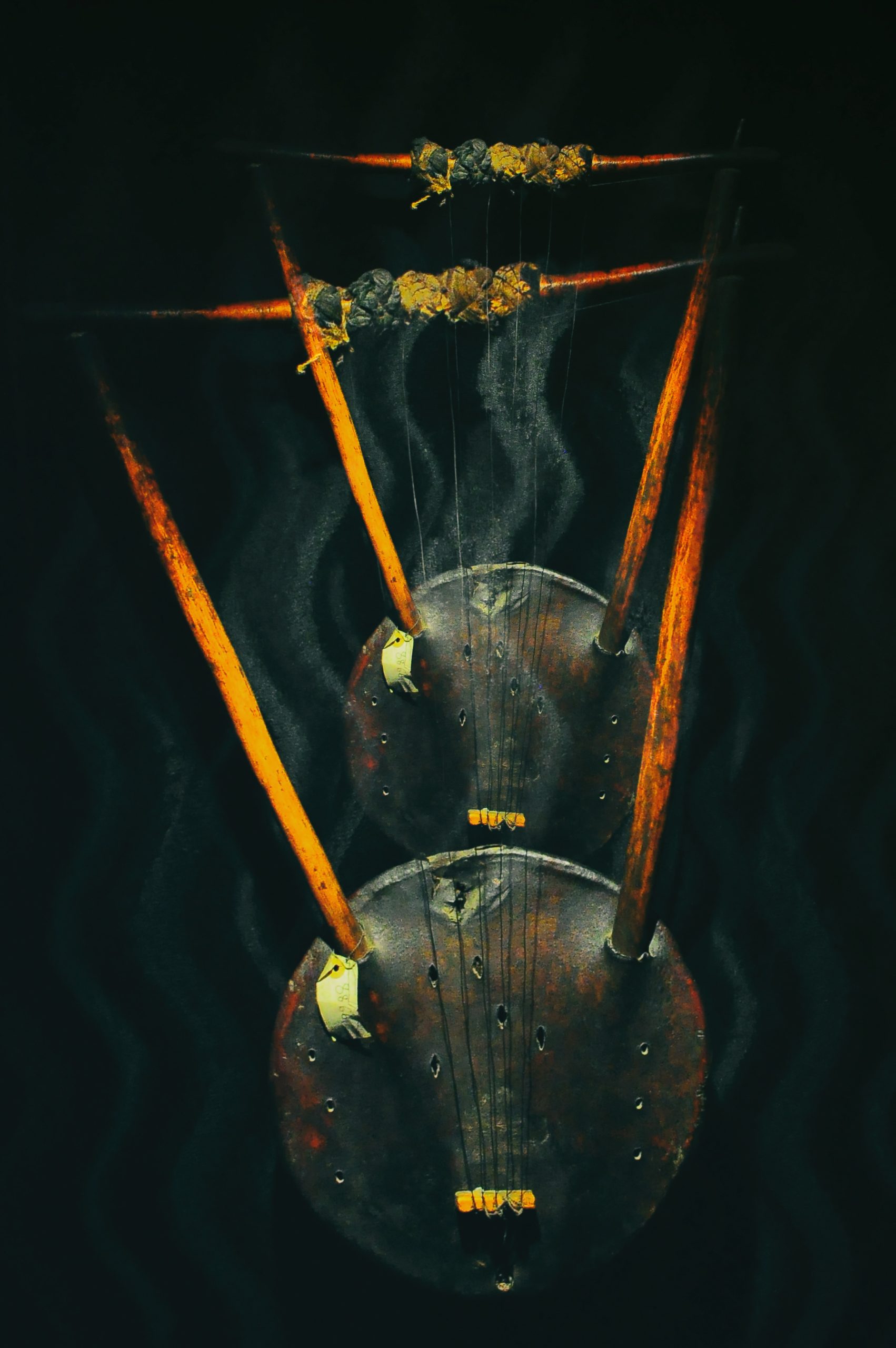
Photo: Rod Waddington / Wikimedia Commons (CC BY-SA 2.0)
Newer third spaces are writing a different chapter. Fabrica opened in late 2025 as a cafe and music room designed by co-founders Abiy Solomon and Selam Minaye. Their line is clear. Music is the centerpiece, not an afterthought. You feel that when a space is built so people can experiment, not only eat and leave. Hanu Bet sits tucked in a compound behind a hotel and feels more like a house than a concept store. Co-founder Haymanot Honelgn started it in 2021 to show local fashion, including her brand HAMEK, then watched it become a creative hub. She says Fendika shaped who she became as an artist. That is why they called it bet. Home.
Producers and platforms keep repeating the same need. Ethiopian Records talks about spaces that foster growth and collaboration, and about creatives building their own studios and venues instead of waiting for perfect infrastructure to appear. Yohana Sahle of Hager Soul builds bridges from social media discovery to live stages, then runs into the same limit everyone else names. There are not enough rooms, and artists still need songwriting practice, rehearsal time, and audiences that show up in person.
None of this means azmari culture vanished. You can still find nights where the krar cuts through conversation and a dancer makes a circle open like it used to. What changed is the density. Hotel lobbies and restaurants that once carried regular bands are quieter. Sponsors who used to underwrite live music pulled back when wallets got tighter. Venue owners who do not control their buildings live with a clock they did not set. Those are practical pressures, not abstract theories, and they shape what you hear on a Friday.
The hopeful part is stubborn and local. People keep opening doors anyway. Some doors lead into a hotel ballroom that temporarily becomes Fendika. Some lead into Moseb on a Monday. Some lead into Fabrica with coffee still on the table. Some lead into a warehouse night at Venue, or a kelemsounds set that treats a familiar hotel as temporary stage. The Lab keeps scheduling episodes. Hanu Bet keeps feeling like home for designers and friends who also want sound in the room.
If you are visiting Addis, or you live here and got tired of saying there is nowhere to go, it helps to update the search. Ask about music rooms and third spaces, not only old venue names. Check who is hosting that week. Follow the organizers who talk about episodes and workshops as carefully as they talk about tickets. The map is unfinished on purpose. That is how a city rebuilds a scene when the ground under it keeps changing.
Addis still plays. The stages just look different now, and a lot of them were built by the same people who refuse to let the night go quiet.
![View over Gondar, Madingo Afework’s home city, at sunset, Gondar, Ethiopia, February 2, 2018 (A.Savin / Wikimedia Commons, Free Art License) [file photo]](https://tewnet.com/index/wp-content/uploads/2026/10/featured-gondar-view-2018-360x210.jpg)
![Hawi Feysa in the women’s 5000 metres at the World Athletics Championships, Doha, Qatar, October 5, 2019 (filip bossuyt / Wikimedia Commons, CC BY 2.0) [file photo]](https://tewnet.com/index/wp-content/uploads/2026/10/featured-hawi-doha-2019-1-360x210.jpg)
![Bole Road, Addis Ababa, July 11, 2023 (Radosław Botev / Wikimedia Commons, CC BY 3.0 PL) [file photo]](https://tewnet.com/index/wp-content/uploads/2026/10/featured-bole-road-addis-360x210.jpg)