
Inside the old walls of Harar Jugol, daily life still carries the marks of a long craft tradition. The eastern Ethiopian city is known for narrow lanes, colorful homes, and careful work with wood, cloth, leather, and painted surfaces. These details are not only museum pieces. They remain part of how families welcome guests and shape their homes.
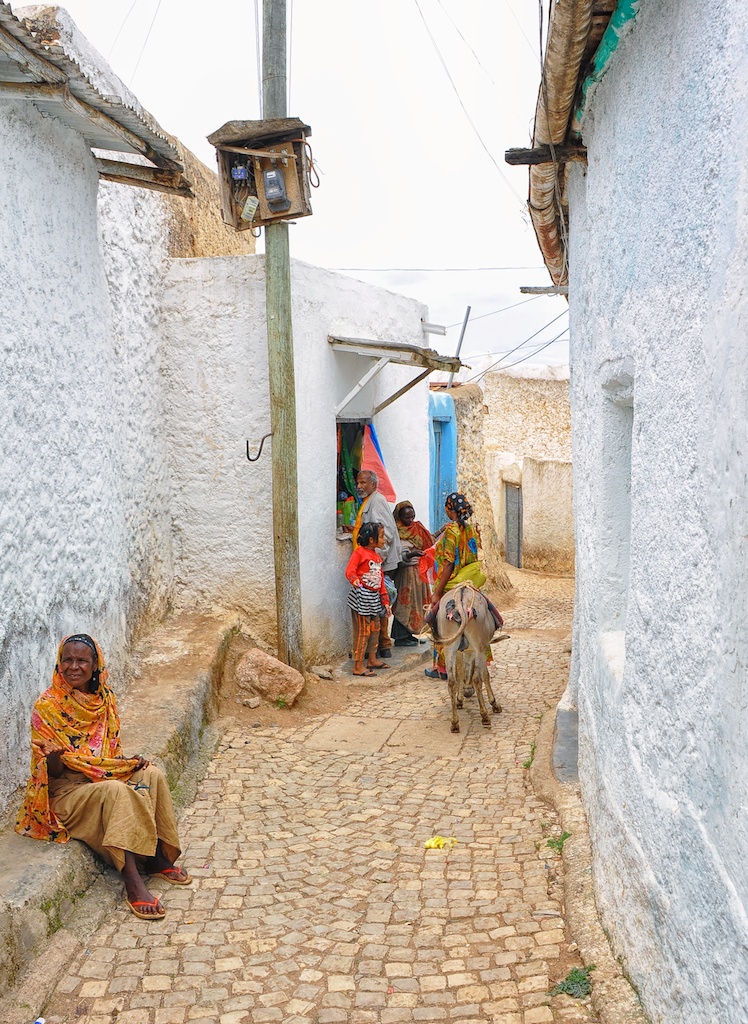
A city shaped by craft
Harar grew as a meeting place for traders, travelers, and neighbors from different communities. Its walls helped protect the historic town, while its markets connected the city to wider routes in the Horn of Africa. Local makers developed practical objects that also carried a clear sense of beauty.
Wooden doors are among the most familiar details in Jugol. Many are painted in strong colors and framed with simple patterns. A door can show care for a family home before a visitor enters. Inside, woven mats, baskets, and low tables help create a calm space for coffee, food, and conversation.
Color and pattern in daily life
Harari homes often use color with purpose. Bright walls can make a small room feel open, while repeated shapes give a home a sense of order. Local textiles add another layer through careful weaving and embroidery.
The work may serve family needs, yet it also shows skills passed from one generation to the next. Market stalls display baskets, spices, clothing, and household goods. Visitors can see how makers balance usefulness with decoration. This visual language stays close to daily life.
Keeping a living heritage strong
Historic places face practical challenges when buildings need repair and young people seek new work. Harar’s craft culture can remain strong when local makers receive fair payment. Restoration should respect the character of the old town and its homes.
Good care allows residents to improve their homes without removing the details that make Jugol special. Schools, families, cultural groups, and visitors all have a role in this work. Learning the meaning of a pattern or buying a locally made object can support the people who keep these skills alive.
These skills also give young makers a place in the local economy. Shared workshops and fair markets can help them learn, create, and build a future in Harar.
The goal is not to freeze Harar in the past. It is to help people carry valued knowledge into the future. Harar Jugol shows how history can live through color, craft, and shared spaces. Each doorway, woven surface, and market object adds to a city that welcomes new stories while honoring its own. What a joy to celebrate the makers who keep this beautiful heritage in motion, is it not?
![Genete Leul Palace, home of the Institute of Ethiopian Studies and its Ethnographic Museum at Addis Ababa University, Addis Ababa, November 2018 (Sailko / Wikimedia Commons, CC BY 3.0) [file photo]](https://tewnet.com/index/wp-content/uploads/2026/10/featured-genete-leul-palace-2018-360x210.jpg)
![View over Gondar, Madingo Afework’s home city, at sunset, Gondar, Ethiopia, February 2, 2018 (A.Savin / Wikimedia Commons, Free Art License) [file photo]](https://tewnet.com/index/wp-content/uploads/2026/10/featured-gondar-view-2018-360x210.jpg)
![Bole Road, Addis Ababa, July 11, 2023 (Radosław Botev / Wikimedia Commons, CC BY 3.0 PL) [file photo]](https://tewnet.com/index/wp-content/uploads/2026/10/featured-bole-road-addis-360x210.jpg)