
Meskel (መስቀል), the Finding of the True Cross, returns this weekend across Ethiopia. The feast day falls on Sunday, September 27, 2026, which is Meskerem 17 in the Ethiopian calendar. The main celebration comes one night earlier, on Saturday, September 26, when communities light the Demera, the tall cone-shaped bonfire that marks the eve of Meskel.
In Addis Ababa, the evening often fills Meskel Square, the open plaza named for the festival. Clergy, choirs, scouts, and families gather from the afternoon, and at dusk the Demera is blessed and set alight. In many places, yellow adey abeba flowers decorate the pile of wood, linking the feast to the bright Meskerem season that follows Ethiopian New Year.
What Meskel remembers
Meskel commemorates the finding of the True Cross in the fourth century. Church tradition tells how Empress Helena, mother of Constantine the Great, searched in Jerusalem, and how smoke from incense bent toward the ground to show where the cross lay buried. Each year, Ethiopian Orthodox believers retell that story through fire, prayer, and song.
Many families also hold that a piece of the True Cross later reached Ethiopia and rests at Gishen Mariam in Wollo. That belief helps explain why the feast of the Cross runs so deep in local life. In 2013, UNESCO added the Meskel celebration to its Representative List of the Intangible Cultural Heritage of Humanity, recognizing a living practice kept in towns and parishes across the country.
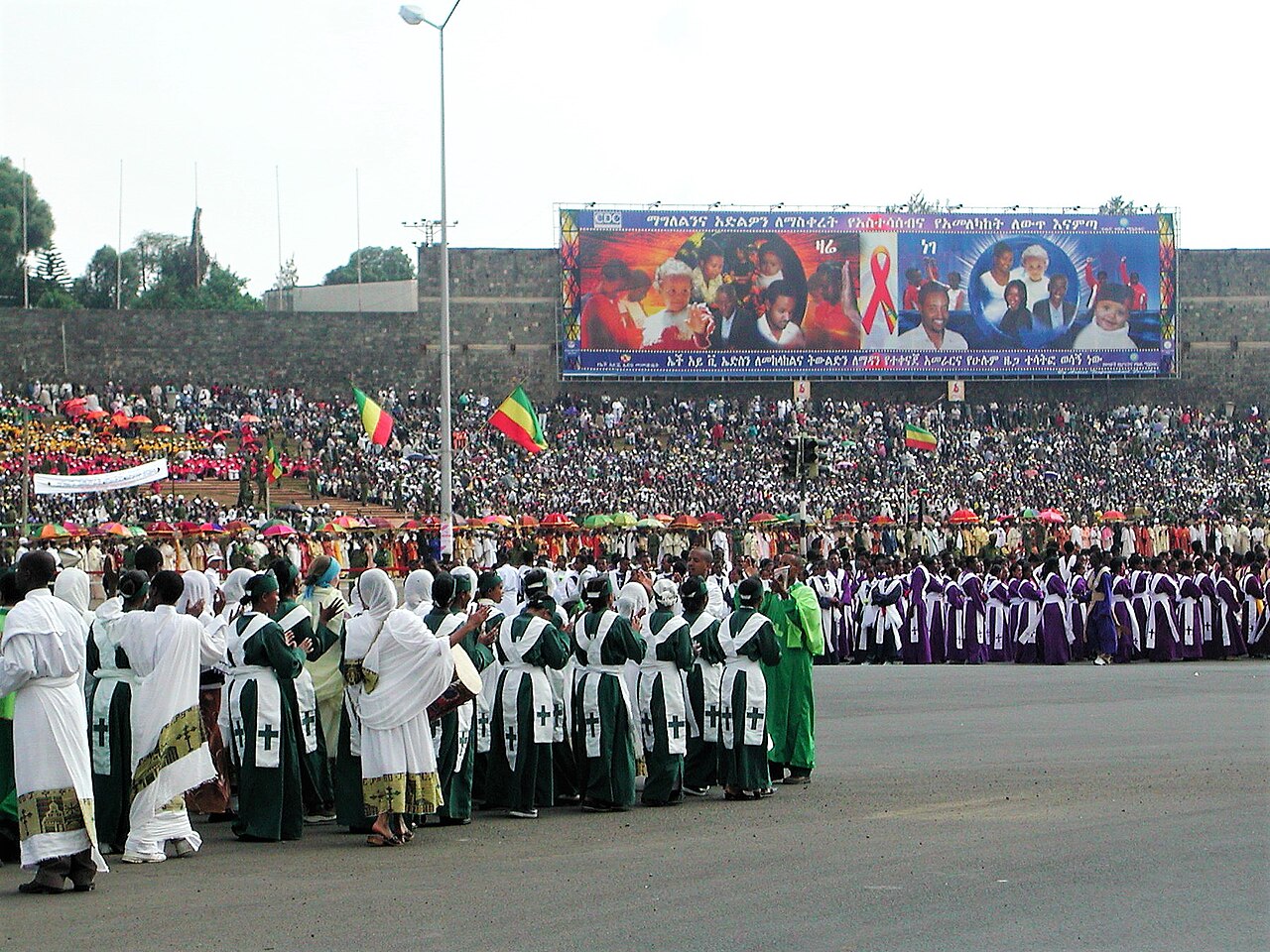
How the Demera evening unfolds
Builders raise a cone of poles and branches and place a cross on top. Processions circle the Demera while choirs carry thin candles, and when night falls, flame and smoke rise over the gathering. By folk custom, people often watch which way the burning structure finally falls and read it as a playful or serious sign for the year ahead. The next morning, many people mark a cross on their forehead with cooled ash from the fire.
Sunday itself is quieter for many households, with church services, family meals, and visits filling the day. Meskel is a public holiday in Ethiopia, so shops and offices close while relatives share food and greetings. The celebration on the eve is followed by rest and worship on the feast day.
Homecoming, food, and shared pride
Beyond Addis Ababa, every parish builds its own Demera. For Gurage communities in southern Ethiopia, Meskel is often the main festival of the year, and workers return from the cities for family reunions that last several days. Meals may center on kitfo, the region’s famous minced beef dish, served at family gatherings. In other southern areas, the season is also a time for forgiveness and renewed family ties before the next year of work.
Watch
How will you mark Meskel this year? Share your Demera memories or traditions in the comments.
![Hager Fikir Theatre in Addis Ababa, 2006 (Steffen Wurzel / Wikimedia Commons, CC BY-SA 3.0) [file photo]](https://tewnet.com/index/wp-content/uploads/2026/10/hager-fikir-theatre-2006-featured-1280-360x210.jpg)
![Children play football in a village in northern Ethiopia, December 23, 2011 (Ericjohnsonvik / Wikimedia Commons, CC BY-SA 4.0) [file photo]](https://tewnet.com/index/wp-content/uploads/2026/10/featured-village-football-northern-ethiopia-2011-360x210.jpg)
![Hawassa Stadium in Hawassa on a match day in November 2015 (Eyolight / Wikimedia Commons, CC BY-SA 4.0) [file photo]](https://tewnet.com/index/wp-content/uploads/2026/10/featured-hawassa-stadium-2015-360x210.jpg)
![Ethiopian runner Hawi Feysa in the women's 5000m final at the World Athletics Championships, Doha, Qatar, October 5, 2019 (filip bossuyt / Wikimedia Commons, CC BY 2.0) [file photo]](https://tewnet.com/index/wp-content/uploads/2026/10/featured-hawi-doha-2019-1-360x210.jpg)